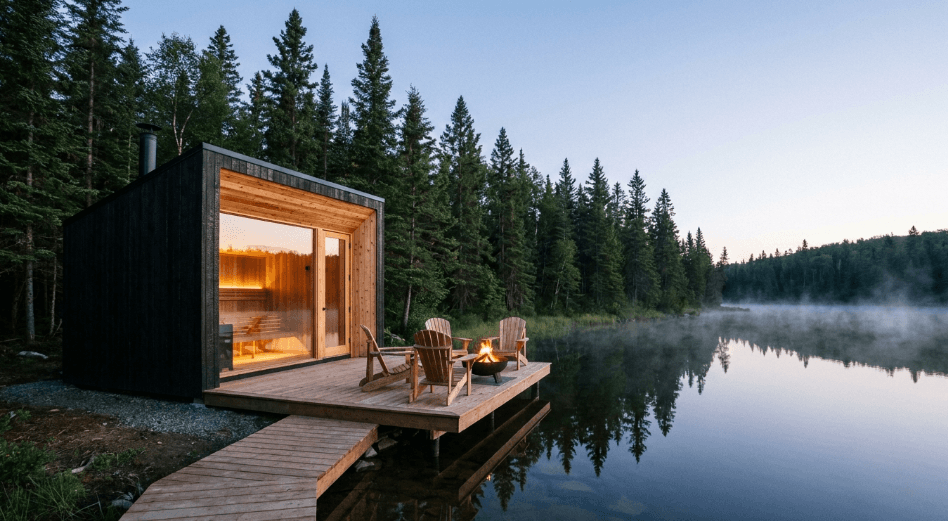
Running an Outdoor Sauna Through a Cold Winter Without Overspending

An outdoor sauna built with proper wall insulation and a tight door gasket runs fine through a hard winter, though expect heat-up time to stretch by 10 to 20 minutes and the electric bill to climb modestly compared with summer use. The single biggest factor in cold-weather performance isn’t the heater’s rated wattage, it’s how well the door seals and how much dead air space sits between the interior paneling and the exterior wall. Getting those two details right costs little extra at purchase and saves real money every winter afterward.
Does Cold Weather Change How an Outdoor Sauna Performs?
Cold air pulls heat out of a cabin faster than mild air does, which means the heater has to work harder and longer to hold the same interior temperature. A cabin that reaches 180 degrees in 30 minutes during a mild fall evening might take 45 to 50 minutes on a 15-degree night, and the heater will cycle on more frequently once the target temperature is reached, since outside cold constantly pulls heat back out through the walls and door. None of this makes winter use impractical, but it does mean a poorly insulated or badly sealed budget unit will show its weaknesses far more in January than it ever did in September.
How Long Does It Take to Heat Up in Freezing Temperatures?
For a well-built two-person cabin with 4.5 to 6 kilowatts of heater capacity and proper insulation, expect 40 to 55 minutes to reach a solid 170 to 180 degrees when the outside temperature sits below freezing, compared with roughly 30 minutes in mild weather. Preheating before you’re ready to use it, rather than starting the heater right as you plan to step in, avoids the frustration of an underheated first session. Some owners in colder climates run the heater on a timer so the cabin is at temperature by the time they get home from work.
What Insulation and Door Details Matter Most in Winter?
Wall insulation quality matters, but the door is usually the weak point that determines how a budget sauna performs in the cold. A magnetic or compression gasket around the full door frame, rather than just a strip along the bottom, cuts heat loss meaningfully compared with a poorly fitted door on an otherwise identical cabin. Double-pane glass in the door, where the model offers it, also helps, since single-pane glass in a wood door is a substantial cold spot in freezing weather. None of these upgrades are expensive relative to the total cost of the sauna, but they matter far more in a cold climate than they would in a mild one.
How Do You Protect the Unit From Winter Damage?
Snow load on the roof should be cleared periodically rather than left to accumulate, particularly on flatter roof designs, since standing snow that melts and refreezes can work its way under shingles or roofing panels over a season. Any exterior shower, hose bib, or plumbing run installed near the sauna needs to be drained and shut off before the first hard freeze, since a burst line is one of the more expensive repairs a winter can cause. Before the cold sets in, it’s also worth comparing current model listings for cold-climate features like upgraded door seals, since not every retailer, including SweatDecks, Redwood Outdoors, and Almost Heaven, specs the same gasket quality across their lineup even at similar price points.
What Does Winter Use Do to Long-Term Maintenance Costs?
Longer heat-up times and more frequent heater cycling in winter add modest wear to heating elements over the years, but this is a normal, expected part of owning a sauna in a cold climate rather than a sign something is wrong. The bigger long-term cost driver is moisture, since a sauna that goes from a hot, humid interior to freezing exterior temperatures repeatedly needs its seals and exterior finish checked more often than a unit used only in mild weather. A yearly inspection of the roof seal, door gasket, and any exterior stain or sealant catches small issues before a hard winter turns them into a bigger repair.
Does a Cold-Climate Sauna Need a Vapor Barrier Upgrade?
A proper vapor barrier between the interior paneling and the exterior wall matters more in a cold climate than a mild one, since the bigger swing between a hot, humid interior and a freezing exterior drives more moisture through the wall assembly each session. A foil-faced barrier installed correctly, sealed at every seam and staple point, keeps that moisture from condensing inside the wall cavity where it can rot framing or grow mold over a few winters. Budget units sometimes cut corners here with a thinner barrier or gaps at the corners, which will not show a problem the first winter but tends to surface as soft spots or a musty smell by the second or third season.
How Should You Handle Ventilation in Cold Weather?
It is tempting to seal a sauna up tight in winter to hold heat, but a small intake and exhaust vent still need to stay clear for air quality and to let the interior dry out fully between sessions. Blocking vents to save heat traps moisture inside the cabin, which works against the insulation upgrades meant to protect the wood over a cold season. The better approach is a well-sealed door and walls paired with vents that stay open as designed, rather than closing off airflow to compensate for a leaky door that should be fixed instead.
Is It Worth Running the Heater Between Sessions in Winter?
Some owners in very cold climates keep the heater on a low idle setting between sessions rather than letting the cabin fully cool to outdoor temperature, which cuts the reheat time noticeably but adds to the electric bill across the week. For someone using the sauna most days, a low idle can pay off in convenience. For occasional weekend use, it usually costs more in electricity than it saves in wait time, so the better call depends on how often the sauna actually gets used through the cold months rather than a single fixed rule.
Frequently Asked Questions
Does an outdoor sauna work well in freezing temperatures? Yes, a properly insulated outdoor sauna works fine in freezing weather, though it takes 10 to 20 minutes longer to reach target temperature and the heater runs more often to hold it.
How do you keep sauna pipes from freezing in winter? Most small outdoor saunas do not have plumbing to freeze, but any exterior shower or hose bib installed nearby should be drained and shut off before the first hard freeze.
Does winter use increase the electric bill significantly? It increases it somewhat, since the heater works harder against a bigger temperature gap, but for a typical 4.5 to 6 kilowatt heater the added cost is usually modest, not dramatic.
What insulation upgrade matters most for cold-climate sauna use? A well-sealed door with a proper gasket matters more than almost any other single upgrade, ahead of wall or roof insulation quality.
References
- Benefits and risks of sauna bathing, The American Journal of Medicine, 2001
- Does the Combination of Finnish Sauna Bathing and Other Lifestyle Factors Confer Additional Health Benefits? A Review of the Evidence, Mayo Clinic Proceedings, 2023
- Effects of heat and cold on health, with special reference to Finnish sauna bathing, American Journal of Physiology – Regulatory, Integrative and Comparative Physiology, 2018