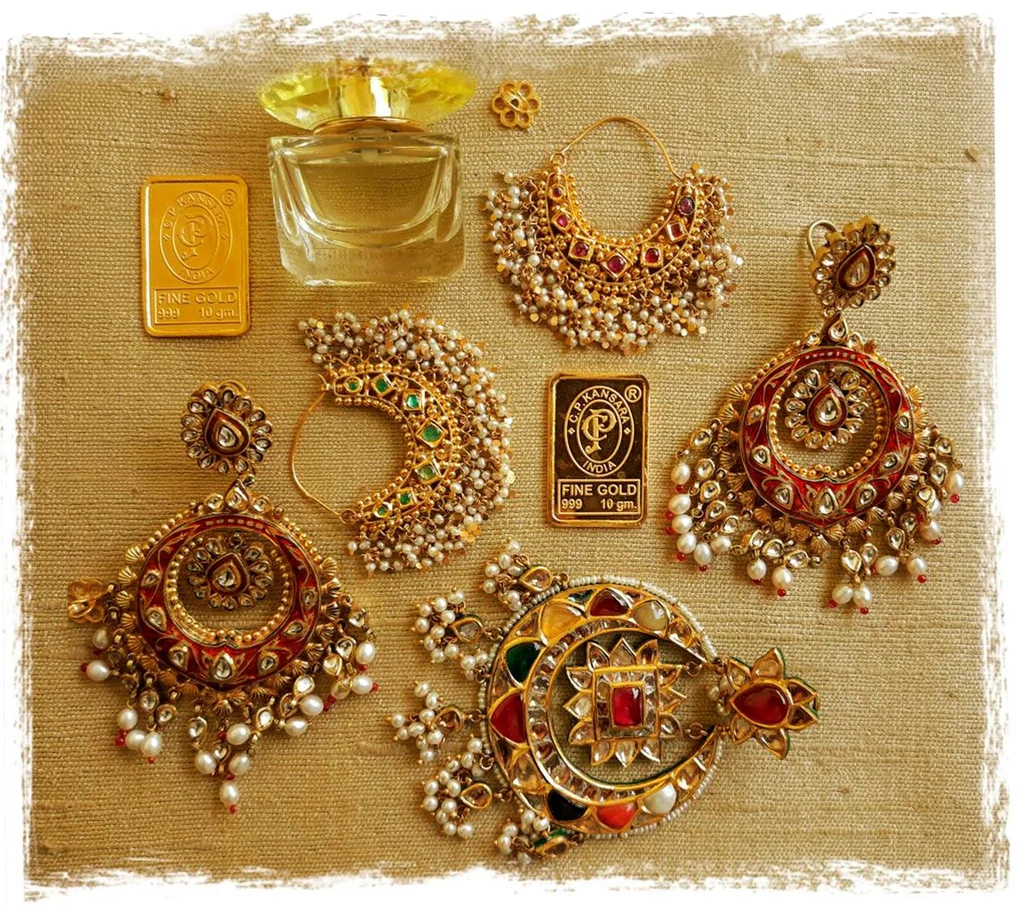
Traditional Indian Bridal Jewelry Designs: Elements and Craftsmanship

A bridal set is more than a group of shiny pieces. Each part has a role, and each is made with specific methods. Traditional Indian bridal jewelry designs follow patterns that families and artisans have refined over generations. This article breaks down the main elements and the craft behind them, so you can read a set the way a jeweler does.
Components of Indian Bridal Jewelry
The components of Indian bridal jewelry cover the body from head to toe. At the top, a headpiece such as a tikka or matha patti frames the face. Earrings, a nose ring, and sometimes a hair ornament come next. A necklace or choker sits at the neck, often with long layered chains below it.
Arms and hands carry bangles, armlets, and a haath phool, which links a ring to a bracelet by thin chains. A waist belt, called a kamarband, holds the saree or lehenga in place. Anklets and toe rings complete the look.
Not every bride wears all of these. Regional customs and personal taste decide the final list. Still, knowing the full range helps you plan.
Traditional Bridal Necklace Designs
Traditional bridal necklace designs set the tone for the whole set. They come in several forms. A choker sits close to the throat. A rani haar is a long layered piece that falls over the chest. A mangalsutra marks marriage in many Hindu communities.
Southern brides often wear temple necklaces. These carry carved deities and sacred symbols in bold gold. Northern brides may choose Kundan or polki necklaces with pearl drops. In Maharashtra, the thushi is a tight choker of small gold beads, and the bride may add several layers around the neck.
Length matters. A short necklace and a long one often appear together for a layered effect. The shorter one frames the neck, and the longer one fills the space below.
Many shoppers start by looking at Indian bridal jewelry sets because a full group with matching pieces removes the need to coordinate each part on their own.
Kundan Gemstone Setting Techniques
Kundan gemstone setting techniques are among the most admired in Indian jewelry. The method uses gold foil to hold stones in place. It differs from prong settings, which use metal claws.
First, the setter prepares a gold frame filled with lac. The stone is pressed into the lac. Then a thin strip of pure gold foil is shaped around the stone’s edge. The foil is pushed gently until it forms a smooth wall that grips the stone.
This approach works well with uncut diamonds, known as polki, because their flat, uneven surfaces sit neatly in foil. It also works with colored stones like rubies and emeralds. The finished surface looks soft and glowing.
Quality shows in the edges. They should be even and tight, with no gaps around the stone.
Indian Bridal Jewelry Craftsmanship
Indian bridal jewelry craftsmanship splits into many specialties. A designer sketches the pattern. A goldsmith builds the frame. A setter places the stones. An enameler adds color. A polisher finishes the surface.
Each person spends years learning one skill. A setter may work on stones for a decade before being trusted with expensive pieces. This split keeps standards high, because each expert focuses on a narrow task.
Hand work also shapes how a piece feels. Small differences between two earrings are normal. They show that people, not machines, made them. What matters is whether the pieces look balanced and sit well on the body.
A good bridal set must also handle a long day. Joints should be strong, clasps should be secure, and the weight should be spread evenly.
Heritage Bridal Ornaments
Heritage bridal ornaments are pieces that families keep for generations. A grandmother’s necklace, a mother’s bangles, or an old pair of earrings may all appear at a wedding. Even when the stones are reset into a new design, the gold often stays the same.
These items hold memory. A bride who wears them connects with those who wore them before. Many families see this link as a blessing.
Heritage pieces also set the standard for new work. Makers study old designs to learn proportions, patterns, and methods. Newer sets often borrow from them, with lighter weights for easier wear.
Traditional Wedding Jewelry Styles
Traditional wedding jewelry styles differ by technique and by look. Kundan uses gold foil and bright stones. Polki highlights uncut diamonds. Meenakari uses colored enamel. Temple jewelry features carved deities. Filigree uses fine twisted wire.
Each style suits a different taste. Kundan and polki are favorites for grand, northern-style weddings. Temple jewelry is a staple in southern ceremonies. Meenakari adds color and works well with simple outfits.
Many sets combine two or more methods. A necklace might use Kundan on the front and enamel on the back. This kind of layering adds depth without extra size.
The craft behind Indian kundan jewelry shows up in the way stones, foil, and enamel work together, and it remains a favorite choice for bridal sets in many communities.
How to Check Quality Before You Buy
A few simple checks help. Turn the piece over and look at the back. Clean, smooth work suggests careful making. Study the edges around each stone. They should be tight and even.
Hold the necklace or earrings and see how they hang. Test the clasps and hooks. Ask about the materials and where the piece was made. A good seller can answer without hesitation.
Think about how it will feel on the day. A bridal set may be worn for six hours or more. Weight and balance matter as much as looks.
The Takeaway
Traditional Indian bridal jewelry designs combine many parts, each with a purpose. Necklaces set the tone, headpieces frame the face, and bangles and anklets finish the look. Behind each part stand specific skills, from Kundan setting to enameling.
When you look at a bridal set, check the components, the settings, and the back of each piece. Those details tell you how the set was made and how well it will last.