Benefits of Using a Handheld Laser Welder in Modern Fabrication

Most fabrication shops run on tight schedules. Jobs need to go out on time and customers expect clean results. When welds need extra grinding or fixing – the clock keeps running and costs start climbing.
Traditional welding still works but it often means more cleanup after the weld is done. This is one reason many shops are taking a closer look at a handheld laser welder.
This is not about throwing out every other machine in the shop. It is about making certain jobs faster and easier to manage. Here is what usually changes when this type of welder becomes part of the daily workflow.
Faster Work on Daily Jobs
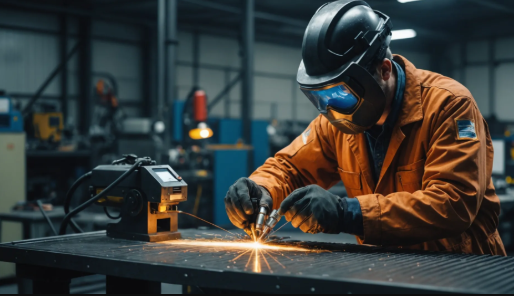
Speed is one of the first things fabricators notice. A handheld laser welder can move across seams quickly, especially on thin or medium materials.
The laser delivers energy directly into the joint. Heat does not spread as much as it does with MIG or TIG welding. That means less waiting between passes and fewer slowdowns.
Faster welding can lead to:
- Shorter production time
- More parts finished per shift
- Lower labor hours per project
- Better shop flow
In a busy shop, even small time savings add up fast.
Less Grinding After Welding
Grinding and polishing take time. Many traditional welds leave spatter or uneven beads that need cleanup.
Laser welding produces a narrow and controlled seam. The weld area is cleaner from the start. There is usually less spatter and less excess material around the joint.
Shops often notice:
- Smoother weld appearance
- Reduced grinding time
- Fewer finishing steps
- Cleaner stainless steel joints
Less finishing work means more time spent on production instead of correction.
Easier for Operators to Learn
Training new welders can take months. TIG welding especially requires strong hand control and steady technique.
A handheld laser welder simplifies part of that process. Many systems include preset settings for common materials. Operators focus more on positioning and movement rather than adjusting arc behavior.
This can result in:
- Faster onboarding for new workers
- More consistent welds between shifts
- Less dependence on highly specialized skills
Reduced Heat and Less Distortion
Controlling heat is a daily challenge in fabrication work. When too much heat builds up – thin sheet metal can bend or twist out of shape.
Laser welding focuses energy on a very small spot. Since the heat stays more contained, there is less warping in the finished part.
Lower distortion leads to:
- Better part alignment
- Fewer corrections after welding
- Improved fit during assembly
- Lower scrap rates
Parts often require less straightening, which saves both time and material.
Flexibility With Different Metals
Most fabrication shops work with more than one type of material. Stainless steel. Carbon steel. Aluminum. Each metal behaves differently.
A handheld laser welder can handle multiple materials when settings are adjusted properly. This allows one machine to support different jobs without switching processes constantly.
That flexibility helps with:
- Custom fabrication work
- Small batch orders
- Repair projects
- Mixed material environments
Having one system that adapts to different metals simplifies operations.
Cleaner Shop Conditions
Traditional welding can create sparks, smoke, and scattered debris. Laser systems often produce less visible spatter during operation.
Many setups include fume control systems that support cleaner air in the workspace.
This can contribute to:
- Cleaner floors
- Reduced post-weld cleanup
- Better overall shop organization
Proper safety equipment is still required. A more controlled process can improve day-to-day working conditions.
See also: business support phone number
Mobility on the Shop Floor
Another advantage of the handheld laser welder is portability. Many units are compact and easy to move around.
This helps when working on:
- Large frames
- Heavy assemblies
- Equipment that cannot be repositioned easily
- On-site repair work
Instead of moving the part to the machine, the machine can move to the part.
That flexibility makes certain jobs easier to manage.
Looking at the Long-Term Cost
The initial price of a handheld laser welder can be higher than traditional equipment. That is often the first concern.
Long-term savings may come from:
- Less grinding labor
- Fewer rejected parts
- Faster project completion
- Reduced material waste
When labor hours and rework costs decrease, the overall impact becomes clearer over time.
Cost evaluation should include daily workflow changes, not just the purchase price.
Is It Right for Every Shop
Laser welding does not replace every method. Heavy structural work may still require other systems. Very thick materials may not be ideal for some laser units.
The decision depends on:
- Type of fabrication work
- Material thickness range
- Production volume
- Budget planning
Shops focused on precision fabrication and thinner materials often see the strongest benefits.
Final Thoughts
Fabrication work happens fast and small delays add up quickly. A handheld laser welder can help:
- speed up welding
- cut down on grinding
- reduce warping on thinner parts
The right welder can change how jobs move through the shop. Work flows smoother when there is less rework and fewer corrections.
Buying new equipment is a serious decision. It makes sense to look at daily workflow and real shop needs before making that investment.