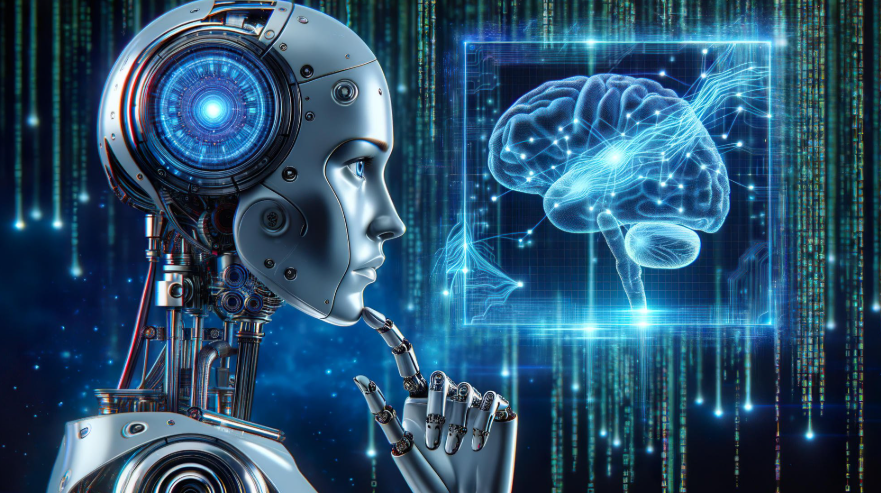
The Different Types of Artificial Intelligence Explained

Artificial Intelligence encompasses a spectrum of capabilities, categorized primarily into Narrow AI, General AI, and Superintelligent AI. Each type exhibits distinct functionalities and limitations. Narrow AI excels in specific tasks, yet lacks broader cognitive abilities. In contrast, General AI strives for human-like intelligence across multiple domains. Meanwhile, Superintelligent AI poses profound questions about its potential impact on society. What implications do these distinctions hold for the future of technology and ethics?
Understanding Narrow AI
Narrow AI, often referred to as weak AI, represents a specific subset of artificial intelligence designed to perform particular tasks with a high degree of efficiency.
Its applications range from image recognition to language processing, showcasing remarkable capabilities.
However, narrow AI limitations become evident when addressing complex, multifaceted problems, as it lacks generalization and adaptability—qualities essential for broader, more autonomous intelligence pursuits.
See also: The Future of SEO: Emerging Trends and Techniques to Watch
Exploring General AI
General AI, often referred to as strong AI or artificial general intelligence (AGI), embodies a theoretical framework that aspires to replicate human cognitive abilities across a wide array of tasks.
This pursuit raises significant inquiries into the general capabilities of such systems and their ethical considerations.
As AGI develops, society must navigate the implications of autonomy, accountability, and the potential impact on human freedom.
The Role of Superintelligent AI
Superintelligent AI represents a pivotal evolution in artificial intelligence, characterized by its capacity to surpass human cognitive capabilities in virtually every domain of intellectual endeavor.
Its development raises significant ethical implications, prompting discussions on autonomy, decision-making, and societal impact.
Future predictions suggest that such advancements may redefine human roles, necessitating careful consideration of governance frameworks to ensure alignment with human values and freedoms.
Comparing Weak AI and Strong AI
The landscape of artificial intelligence can be distinctly categorized into two main types: weak AI and strong AI.
Weak AI applications, such as virtual assistants and recommendation systems, operate within predefined parameters, lacking true understanding.
In contrast, strong AI potential remains largely theoretical, envisioning systems capable of independent reasoning and emotional comprehension.
This distinction raises critical questions about the future trajectory of AI development and ethical implications.
Conclusion
In contemplating the landscape of artificial intelligence, one might ironically ponder the quest for General AI, a pursuit aimed at emulating human cognition. Yet, as society grapples with the limitations of Narrow AI, it becomes evident that the true challenge lies not in replicating intelligence but in aligning it with ethical standards. In a world increasingly reliant on algorithms, the irony is palpable: the more we strive for superior intelligence, the more we risk overlooking the fundamental human values that define us.