Tattoo Studios Lose Removal Work To Five Avoidable Mistakes

The removal consult you hand to the clinic down the street is not a courtesy, it is a service line walking out of your building on its own two feet. Most studios lose that work for reasons that have nothing to do with talent at the table. Owners who start comparing laser schools phoenix az programs are usually chasing one thing, which is supervised hours on a real device with a real client under it. Five mistakes account for almost all of the leak, and four of them happen before a laser is ever fired.
Referring Removal Down The Street Costs Twice
Send a client out for fading and you usually lose two appointments, not one. The clinic that lightens the piece books the follow-ups, and by the time the skin is ready for fresh work, that client has a relationship with somebody else’s front desk. Two requests a week in a Phoenix studio is not a rounding error, it is roughly a hundred conversations a year ending with an address that is not yours. What we see most often is that the cover-up never comes back either.
The referral feels polite. It is a standing transfer of your own pipeline.
Buying A Device Before Anyone Is Trained
Equipment lands first in a surprising number of shops, financing and all, while nobody on staff has logged an hour on it. Clock hours are the currency in this work, and they are slower to accumulate than any vendor demo suggests. Del Mar College reported in December 2025 that its new Level II cosmetology certificate carries students past the 1,000 clock hours needed for licensing, which is a useful yardstick for an owner assuming a weekend certificate covers the same ground. In Arizona, cosmetic laser credentialing runs through the state health department rather than the cosmetology board, and that split varies from state to state, so confirm what yours asks for before you sign anything with a distributor.
Treating Every Ink Color As One Problem
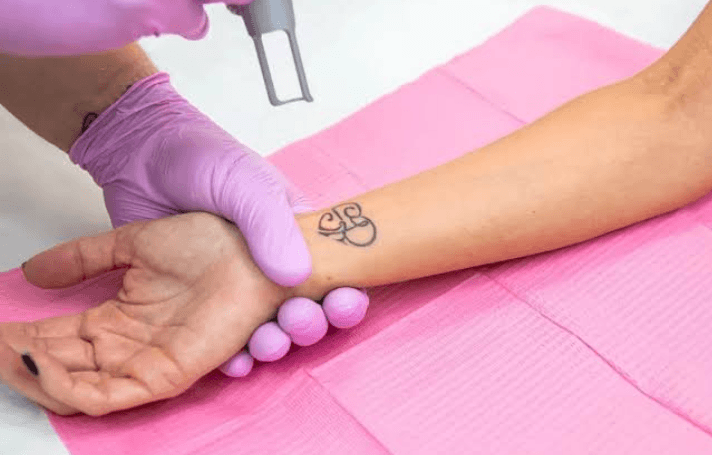
Black absorbs broadly and clears in a way that flatters a new operator’s confidence. Green, sky blue and a few stubborn yellows do not, because pigment answers to particular wavelengths and ignores the rest. Run one setting across a whole sleeve and you will fade the black, leave the color sitting there, and hand the client a patchy forearm to explain. Wavelength selection is a matching problem rather than a power problem, and pushing what operators call fluence, meaning the energy dose landing on each square centimeter of skin, is the wrong reflex when a color refuses to move. The device has no opinion about how clean your linework is.
Skipping Skin Type Assessment Before The First Pass
This is the mistake that turns a revenue idea into an incident report, and it is the one worth slowing down for. Skin type drives everything that follows: the wavelength, the pulse duration, the spacing between sessions, and how much fading a client should realistically expect by session four. Settings and wavelength are chosen for that individual’s skin type by a trained operator, and everyone in the room wears eye protection rated for the wavelength in use, no exceptions for the person just watching. Darker skin holds more competing pigment, which narrows the safe window rather than closing it, and a test spot read a week later tells you more than any chart on the wall. Operators who skip typing tend to find out about it through a hypopigmented patch that outlasts the tattoo.
Aftercare is the fifth mistake, and it is the cheapest to fix. Sending a client home with a verbal summary and no written instructions produces the same phone call every time, usually on a Saturday, usually about a blister the client has already picked at. Give them the sheet, book the follow-up before they leave, and log the device, the setting and the date for every pass. A studio that keeps those notes can defend its work and can also explain, honestly, why session three looks different from session one.
Studio Owners Ask These Removal Questions
Can I just train an artist in house on the machine?
Vendor training teaches the buttons, not the judgment. What it cannot give anyone is supervised hours on varied skin types with an instructor standing there when a client reacts badly, and that is exactly the gap a credential-track program fills. Studios that try the in-house route usually end up paying for real training anyway, just later and with a few stories they would rather not tell.
See also: Why Online English Classes Suit Busy Learners
What should I do if a client blisters after a session?
Treat it as a medical matter, not a technical one. The clinical reference on laser tattoo removal in StatPearls documents blistering, burns and scarring among the risks when the procedure is not performed properly, and the rule we teach is unbending: blistering, scarring or a lasting pigment change after a session goes to a clinician, never to another pass. Write down what device was used, at what setting, on what date, and send that record along with the client.
Trained Hands Turn Refusals Into Bookings
Four of these five mistakes cost nothing to correct, because they are decisions about order of operations: train first, buy second. The fifth costs a printed sheet and a calendar entry. Owners weighing laser schools phoenix az options on supervised device hours rather than on tuition alone generally get more back, since time on live clients is what turns a certificate into an operator you can put in front of a nervous client. Two requests a week is a service line waiting to be answered in your own chair.