Speed Feedback and Driver Behaviour: Why Real-Time Numbers Change Habits

Most drivers do not set out to speed. They drift above the limit while thinking about something else, following traffic, or misjudging their pace on a wide road. That quiet drift is exactly why speed feedback works so well. A live number, shown back to the driver in the moment, breaks the autopilot and turns an unconscious habit into a conscious choice.
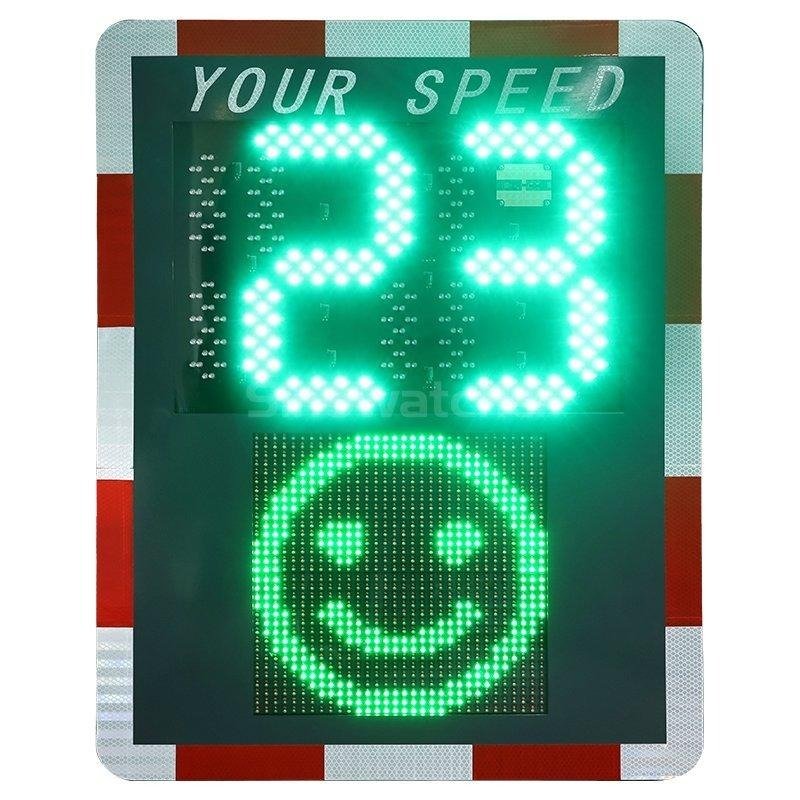
A dynamic speed feedback sign pairs Doppler radar with a bright display showing each approaching vehicle its own speed. The number updates in real time, so the driver sees cause and effect at once: ease off the pedal and the number falls. That instant loop separates feedback from a static limit sign, which states a rule but never shows compliance.
Why Live Numbers Beat Static Signs
A posted limit is easy to miss or forget, and the brain filters out signs that never change. A static sign also demands mental work: read the limit, glance at the speedometer, compare the two, and decide whether to act. On familiar roads, that comparison often never happens. A speed display sign removes every step of that work: the speed is already measured and compared, and the result appears in large digits at the decision point.
- The number is personal, showing the driver’s own speed rather than a general rule.
- The feedback is instant, arriving while the driver can still act on it.
- The message is simple, with no words to read or interpret at speed.
- The loop is visible, so slowing down brings an immediate reward.
The Feedback Loop That Builds New Habits
Habits form on a simple pattern: a cue triggers a behaviour, and a consequence reinforces it. Speeding on a familiar road is often a habit built on absent feedback, since nothing draws attention to the faster pace. A driver feedback sign inserts a new cue and a new consequence. The red display above the limit signals that the behaviour is visible; the green display after slowing confirms the right choice. Repeated daily, the slower speed becomes the new automatic default.
- The sign creates a cue that interrupts automatic driving.
- The colour change rewards slowing down with instant confirmation.
- Daily repetition turns the corrected speed into the new default.
- Anticipation replaces reaction as drivers slow before the display.
Inattentive Speeding and Deliberate Speeding
Not all speeding has the same cause. Inattentive speeding is the common case: the driver has drifted above the limit without noticing, because a wide road or light traffic masks rising speed. For these drivers a live number is usually enough, and they correct the moment they see it. Deliberate speeding is harder, since these drivers know the limit and choose to exceed it. Feedback rarely converts them fully, but it narrows the gap and removes the excuse of ignorance.
- Inattentive drivers correct quickly once the number makes speed visible.
- Deliberate drivers moderate, even if they do not fully comply.
- Both groups lose the excuse that they did not know their speed.
- Displayed speeds give communities honest evidence about real traffic.
Colour and Symbol Cues That Speak Without Words
Numbers carry the message, but colour and symbols carry the feeling. Most LED speed display units use green for speeds at or under the limit and red for speeds above it, a code every driver already understands from traffic lights. The colour registers before the digits do, so even a half-second glance delivers the essential message: safe or too fast. Face-feedback models add another layer, showing a smiling face under the limit and a warning face above it. The sign therefore communicates on three channels at once.
- Green confirms safe driving without demanding any reading.
- Red signals overspeed through a universally understood colour code.
- A smiling face rewards compliance with a warm, human cue.
- A warning face makes excess speed feel noticed rather than anonymous.
See also: How Technology Is Reshaping Everyday Habits
What the Evidence Shows About Lasting Change
The behavioural case for feedback is backed by measured results. A national demonstration project by the Federal Highway Administration and Iowa State University tested dynamic speed feedback signs at 22 rural curve sites in seven US states. Mean speeds fell by up to 10.9 mph, and the share of vehicles exceeding the posted or advisory speed fell 35 to 70 percent at most sites. Expected total crashes fell about 5 percent, and about 7 percent in the direction of the sign. The effects held for 24 months, pointing to genuine habit change rather than novelty. In school zones, Texas Transportation Institute research found average speeds fell 18 percent, from 50 mph to 41 mph.
- Mean speeds fell by up to 10.9 mph at rural curve sites.
- The share of speeding vehicles fell 35 to 70 percent at most sites.
- Effects held for 24 months, showing habits rather than novelty.
- School-zone averages fell 18 percent with radar speed signs.
Frequently Asked Questions
Does speed feedback really change driver behaviour long term?
Yes. The FHWA demonstration found speed reductions held for 24 months at rural curve sites, which indicates lasting habit change rather than a brief novelty effect. Daily repetition converts a one-time correction into a new default speed.
Why does a live number work better than a speed limit sign?
A limit sign states a rule but never tells drivers whether they are following it. A live display shows each driver their own speed in real time, removing the guesswork and making correction immediate and effortless.
Do colour and face cues make a measurable difference?
Colour registers faster than digits, so red and green displays communicate safe or too fast in a fraction of a second. Face symbols add a social cue that reinforces the number with an emotional signal.
Final Thoughts
Real-time numbers change habits because they make the invisible visible. A driver who sees their own speed, in colour, at the exact moment they can act, rarely needs anything more. The feedback loop is gentle and repeatable, and the evidence shows its effects lasting for years. For any road where speeding has become a quiet habit, a live display is often the simplest intervention that actually sticks.